Source Leather Cutting Dies for Shoe Making, DIY Crafts, and Card Design
Compare 30 leather cutting dies from verified Chinese manufacturers. Buyers can evaluate steel and carbon steel options for shoe making, DIY crafts, and card design with customized sizes and shapes.
Key considerations
Products List


Comprehensive Sourcing Guide
Strategic Sourcing Guide for Leather Cutting Dies
Understanding Product Specifications and Material Variability
When sourcing leather cutting dies, buyers must first navigate a landscape defined by significant variation in technical specifications. The core product, often categorized under die cutters or craft dies, serves distinct functions ranging from industrial shoe manufacturing to small-scale artistic decoration. A critical observation in the current market is the divergence in material composition. Some listings explicitly identify the product material as Steel, while others specify Carbon Steel. This distinction is vital for procurement decisions, as the grade of steel directly influences the durability of the blade and its resistance to wear when cutting through dense leather substrates.
The physical dimensions of these tools are rarely standardized. Specifications frequently indicate that the size is "As client required," "Customized Size," or "AS your request." This implies that the majority of viable suppliers operate on a made-to-order basis rather than maintaining a stock of pre-fabricated standard sizes. The model numbers associated with these products, such as "Die cut mould for cuter," "ST-028," or "DD3," serve as internal identifiers for the supplier rather than universal industry standards. Consequently, a buyer cannot rely on a model number alone to determine compatibility; the specific design and shape must be verified against the intended leather pattern.
Furthermore, the shaping mode for these dies varies. While some products are associated with Die Casting, others are designed for general cutting applications. The color of the finished tool is typically Silver Grey, though Customized Color options are available. This aesthetic variation often correlates with different plating or painting processes, such as the "Painting" or "Embossing Printing" noted in certain product attributes. Buyers should treat these color and finish attributes as observations of specific listings rather than universal guarantees for all leather cutting dies, as the primary function remains the mechanical cutting of material.
Application Scope and Functional Versatility
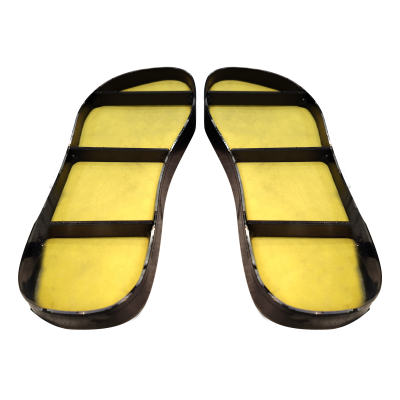
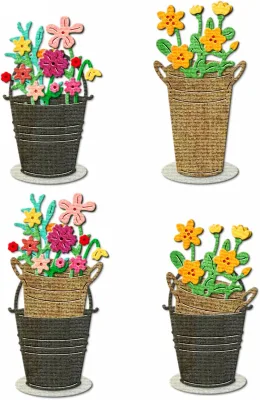
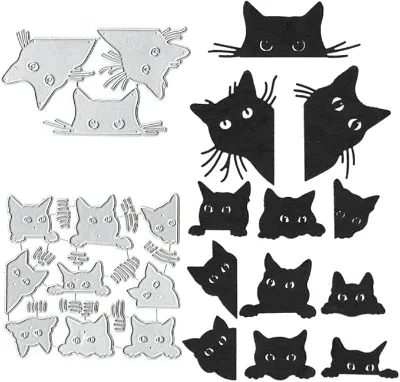
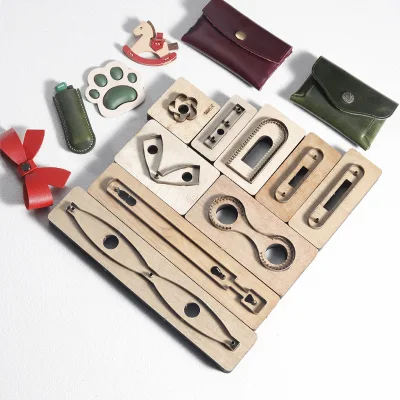
The utility of leather cutting dies extends across multiple industries, necessitating a clear definition of the intended application before engaging with suppliers. The observed usage data reveals a bifurcation in the market. On one end, the product is explicitly designated as an "Insole mould" for the footwear industry, suggesting heavy-duty applications where precision and structural integrity are paramount. On the other end, the same category of tools is marketed for "Decorations, DIY, Card Making," and "Art & Collectible" projects. This indicates that the term "leather cutting die" encompasses both industrial manufacturing tools and hobbyist craft supplies.
For buyers in the footwear sector, the product is often referred to as a "Shoe mould" or "Insole mould," requiring robust construction capable of repeated use in high-volume production environments. In contrast, buyers in the arts and crafts sector may prioritize the "Customized Shape" and "Design" aspects, looking for tools that facilitate intricate patterns for scrapbooking or decorative leather goods. The "Selling Units" for these products often vary from single items to bulk sets, reflecting the scale of the buyer's operation.
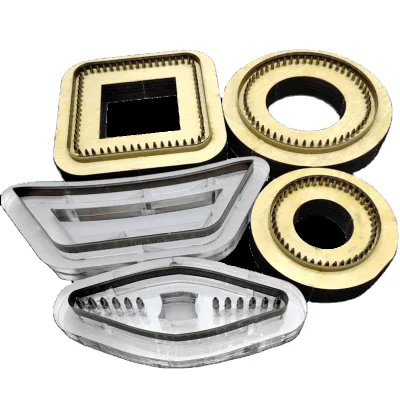
It is essential to note that while the keyword "leather cutting dies" is the core search term, the actual product attributes listed often include broader terms like "Cutting Tools" or "Creative Ornament Metal Art Craft." This semantic overlap requires buyers to scrutinize the "Usage" field of each supplier listing to ensure alignment with their specific needs. A die designed for "Decorations" may not possess the tensile strength required for industrial "Insole mould" applications, even if the material is listed as Steel in both cases.
Cost Drivers and Pricing Dynamics
The pricing structure for leather cutting dies is highly variable, influenced by material costs, customization levels, and order volume. The observed listed price range spans from $0.50 to $50,000 USD. This vast disparity underscores the difference between a single craft die and a large-scale industrial die set or mold. The lower end of the spectrum typically corresponds to simple, pre-cut dies for hobbyist use, often packaged in "Back Card with OPP Bag" with a single gross weight of approximately 0.3 kg. The higher end of the price range likely reflects complex, custom-engineered molds for industrial shoe production, which may be packed in "Wooden Package" and weigh significantly more, with single gross weights reaching 1.0 kg or higher.
Several factors drive these costs. The primary driver is the level of customization. Products with "Customized Size," "Customized Shape," and "Customized Logo" commands a premium over standard items. The material grade also plays a role; while both Steel and Carbon Steel are listed, the specific alloy and heat treatment required for industrial durability will impact the final price. Additionally, the "MOQ" (Minimum Order Quantity) is a significant cost determinant. The observed MOQ range is 1 to 20,000 units. A buyer ordering a single set may pay a higher unit price compared to a bulk order of 100 or 10,000 units.
Buyers must also consider the "Single volume" and "Single gross weight" when calculating logistics costs. Some listings show a single volume of 0 cm³ or a weight of 0.0 kg, which may indicate data entry errors or specific digital listings where physical dimensions are not yet finalized. In contrast, other listings provide precise dimensions like 14x20x0.3 cm or 10x5x2 cm. Accurate volume and weight data are crucial for estimating shipping costs, especially when the "Shipping" method involves "Courier" or "Shipping by sea." The choice between these methods will further influence the total landed cost, with sea freight being more economical for large, heavy industrial molds and courier services being necessary for smaller, urgent craft orders.
Supplier Evaluation and Geographic Considerations
Evaluating suppliers for leather cutting dies requires a careful analysis of their geographic location and production capabilities. The observed "Place of Origin" for these products includes Guangdong, Jiangsu, and Zhejiang, all of which are major manufacturing hubs in China. Each region may have a specialization; for instance, Guangdong is often associated with high-volume manufacturing and export logistics, while Zhejiang and Jiangsu may have strong capabilities in precision tooling and craft supplies.
Brand names associated with these products vary widely, ranging from "Asfrom" and "Glita Creatif" to "YIMEI." These names indicate the level of branding and potential after-sales support a supplier might offer. Some suppliers offer "OEM, OBM" (Original Equipment Manufacturer, Original Brand Manufacturer) support, allowing buyers to customize the product with their own branding. This is a critical factor for businesses looking to establish a private label. However, the presence of a brand name does not guarantee quality; buyers must verify the supplier's ability to meet specific technical requirements.
When evaluating suppliers, buyers should look for clear communication regarding the "Model Number" and "Size." Since many products are "Customized," the supplier's ability to interpret design files and produce the exact "Customized Shape" is paramount. The "Lead time" is another critical metric, with observed ranges of 15-30 days. This timeline should be factored into the overall procurement schedule, especially for time-sensitive projects. Buyers should also verify the "Packing" standards, as industrial molds often require "Wooden Package" protection to prevent damage during transit, whereas craft dies may be packaged in simpler materials.
Quality Control and Compliance Verification
Quality control for leather cutting dies involves verifying both the physical attributes and the compliance standards of the supplier. While specific certifications like ISO 9001 or CE are mentioned in background contexts, they should not be assumed to apply to every listing without explicit confirmation from the supplier. Buyers must request current certification documents to ensure the manufacturing process meets international quality standards.
The material composition is a primary quality indicator. Whether the product is listed as "Steel" or "Carbon Steel," the buyer should request material test reports to confirm the hardness and durability of the blade. For industrial applications, the "Shaping Mode" (e.g., Die Casting) must be verified to ensure the mold can withstand the pressure of leather cutting. Additionally, the "Plating" and "Printing" processes, such as "Painting" or "Embossing Printing," should be inspected for consistency and resistance to corrosion, which is essential for tools used in humid or chemical-heavy environments.
Buyers should also verify the "Single gross weight" and "Single package size" to ensure the product matches the physical description. Discrepancies in these figures can indicate poor quality control or data inaccuracies. For products intended for "Art & Collectible" use, the precision of the cut and the finish of the edges are critical. In contrast, for "Insole mould" applications, the dimensional accuracy and structural integrity are the primary quality metrics.
Long-Term Procurement and Operational Efficiency
Long-term procurement of leather cutting dies requires a strategic approach to supplier relationships and inventory management. Given the "Customized" nature of many products, establishing a long-term partnership with a supplier who can consistently deliver high-quality, custom-molded dies is essential. The "MOQ" of 100 or 10 pieces suggests that buyers should plan their orders to meet these thresholds to optimize costs, unless they are willing to pay a premium for smaller quantities.
The "Lead time" of 15-30 days indicates that buyers should maintain a buffer in their production schedules to account for manufacturing delays. For businesses relying on a steady supply of dies for continuous production, it is advisable to maintain a safety stock of critical tools. The "Shipping" options, including "Courier" and "Shipping by sea," offer flexibility but also require careful planning. Sea freight is cost-effective for large orders but has longer transit times, while courier services are faster but more expensive.
Finally, buyers should consider the "Usage" and "Design" flexibility of the dies. As market trends shift, the ability to quickly modify the "Customized Shape" or "Design" of the dies will be a competitive advantage. Suppliers offering "OEM, OBM" support can facilitate this flexibility, allowing buyers to adapt their product lines without significant retooling costs. By focusing on these long-term considerations, buyers can ensure a stable and efficient supply chain for their leather cutting die needs.
FAQs
What materials are used for leather cutting dies?
Leather cutting dies are typically made from Steel or Carbon Steel. The specific grade influences blade durability and wear resistance when cutting dense leather substrates.
How long does it take to receive custom leather dies?
The standard lead time for these products ranges from 15 to 30 days. This timeline applies to both industrial molds and customized craft dies.
Can I order leather cutting dies with a minimum of one set?
Yes, some suppliers accept a minimum order quantity of 1 Set. Other listings may require higher volumes, such as 100 pieces or 10 pieces depending on the product type.
Which packaging methods are used for shipping these dies?
Packaging varies by application, with options including Wooden Packages for industrial molds or Back Cards with OPP Bags for craft dies. Proper packing ensures protection during transit.
Where are leather cutting dies manufactured?
Products originate from manufacturing hubs in Guangdong, Jiangsu, and Zhejiang, China. These regions offer diverse capabilities ranging from high-volume production to precision tooling.
What customization options are available for die shapes?
Suppliers offer customized sizes, shapes, and logos to meet specific design requirements. The model numbers often serve as internal identifiers rather than universal standards.
How are leather cutting dies priced for different volumes?
Prices range widely from 0.50 to 50,000 USD based on complexity and order volume. Lower costs apply to simple craft dies, while industrial molds command higher prices.